Physical evidence
A machine rarely changes in only one way.
Small shifts across vibration, sound, temperature, motion and environment can become more meaningful when they are allowed to evolve together.
A sensor can tell you what is happening now. SynapticSteel™ is built to stay with a machine over time—preserving what it experiences, what changes, what people observe, what work was performed, and what happened afterward. The result is an evolving, evidence-backed understanding of the individual machine instead of another stream of disconnected readings.
Immediate detection matters. SynapticSteel keeps that capability, then adds continuity: what happened before, what changed, what operators noticed, what maintenance was planned, what work actually occurred, what returned, and what this specific machine is becoming.
The goal is not more alarms. It is a system that can know the difference between a strange reading and a meaningful change because it has a history with the equipment, its operating context, and the people who work on it.
See the architecturePhysical AI can solve many problems. A common pattern is to sense a condition, analyze it, and respond. SynapticSteel keeps that immediate loop, but builds a persistent evidence state around the individual machine so physical observations, human context, interventions and outcomes remain connected as experience accumulates.
This is not a claim that one approach replaces another. Detection and response remain valuable. SynapticSteel™ adds continuity: evidence stays attributable, human context stays distinct from machine belief, and the history of a specific machine remains available to explain how its condition changes over time.
A useful industrial intelligence system can become more specific as the machine ages. It can remember the conditions it has lived through, what operators noticed, what maintenance was planned, what work actually occurred, which patterns returned, and how behavior changed afterward.
Begin with an observed initial condition—not an unsupported claim that the first baseline is healthy.
Learn rhythms, loads, regimes, recurrence and relationships as the asset actually works.
Place planned work, operator observations and confirmed maintenance on the same timeline while preserving which is intent, observation and verified action.
Compare behavior before and after meaningful changes instead of flattening the machine into one permanent baseline.
Carry forward useful evidence so later interpretation can benefit from what the asset has already experienced.
Small shifts across vibration, sound, temperature, motion and environment can become more meaningful when they are allowed to evolve together.
Rotating equipment, process machinery, motion systems, electrical infrastructure and other physical environments where context matters.
Evidence can become episodes, findings and retained learning rather than disappearing into a stream of old telemetry.
Schedules can record what is intended. Work records can establish what actually happened. Operator observations can preserve practical context. Each can sit beside machine evidence without pretending that intent, intuition, intervention and physical response are the same kind of truth.
Experienced operators can contribute observations and intuition that instruments may not capture, while consequential decisions remain with authorized people. Human context informs the evidence state without automatically becoming ground truth.
The value is not a bigger pile of sensors. It is the continuity between physical observation, evidence through time, human operational context, machine-specific understanding and accountable authority.
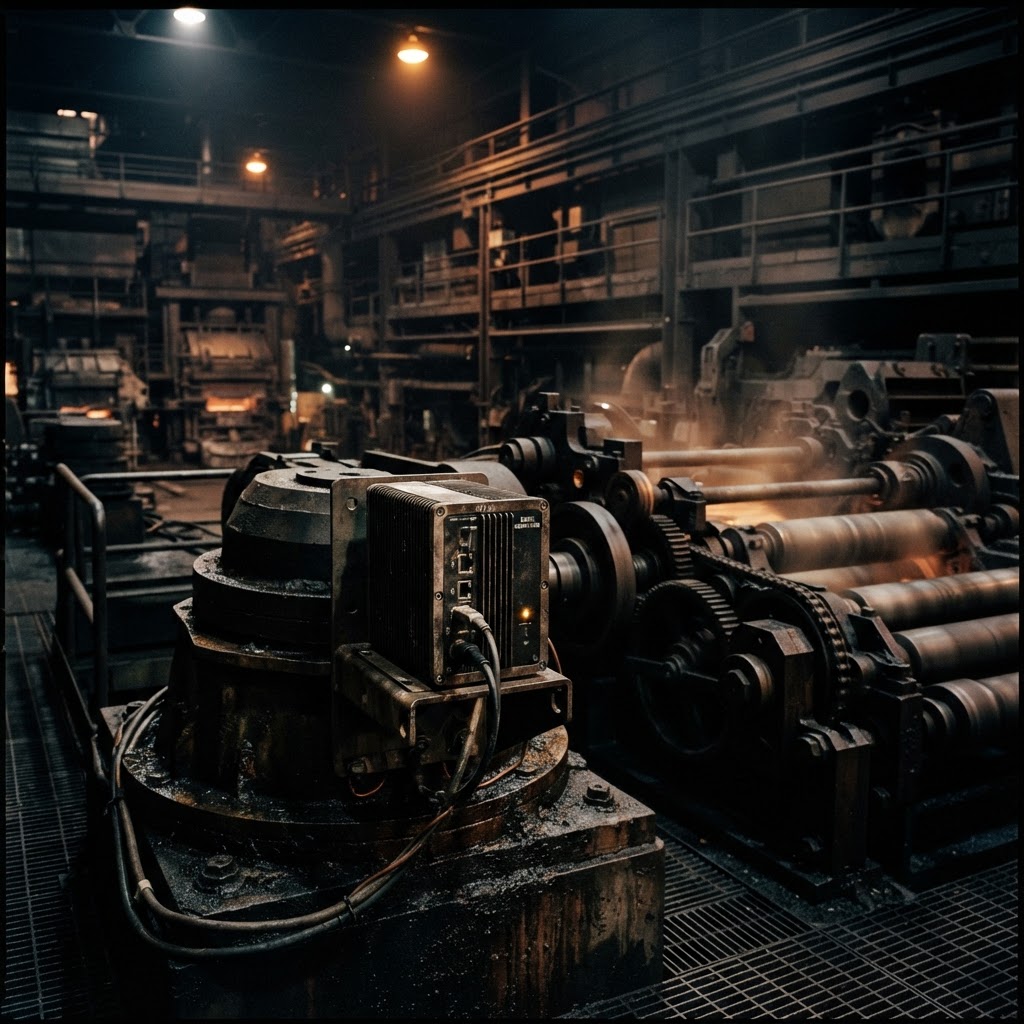
Persistent edge presence close to the machine.
Multiple physical perspectives become one evidence field.
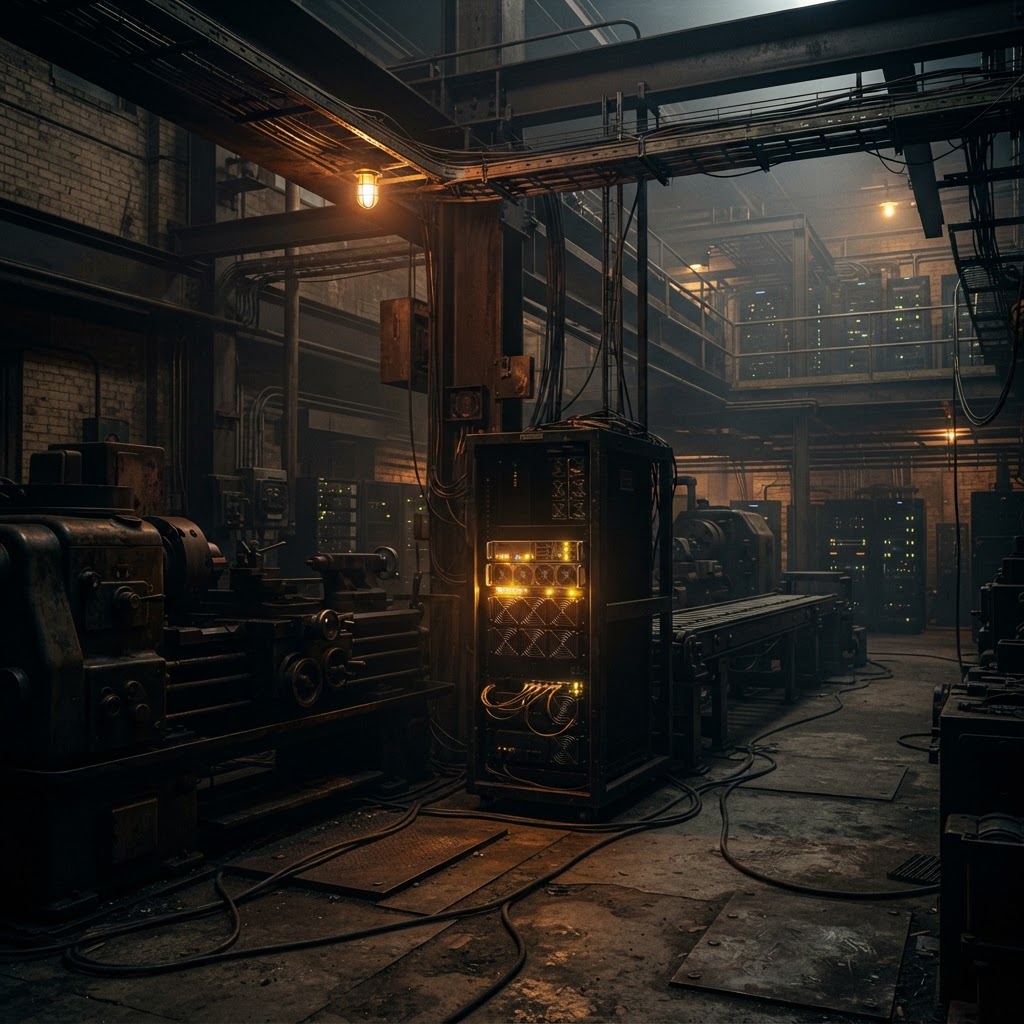
Specialized compute interprets close to the source.
Stay beside the physical system and continuously gather bounded evidence from the environment.
Let vibration, acoustic, thermal, depth, visual, environmental and system observations reinforce or challenge one another.
Preserve trajectories, operating regimes, interventions and recurring patterns instead of treating every reading as a fresh start.
Build context around this machine—its loads, rhythms, maintenance history, operator observations, interventions and changing normal.
Bring physical evidence, temporal history and attributable human observations together without collapsing them into one unquestioned answer.
Operator intuition can become attributable evidence, while consequential changes remain bounded, reviewable and explicitly human-governed.
Tell us about the machine, environment, process, or monitoring gap. We would rather begin with the physical problem than force it into a generic AI pitch.